

loading
HASSLACHER NORICA TIMBER, from wood to wonders
      HASSLACHER NORICA TIMBER, from wood to wonders

      HASSLACHER Glulam made of Larch and Douglas Fir

      for Modern Timber Construction

      Why glulam made of larch and Douglas fir?

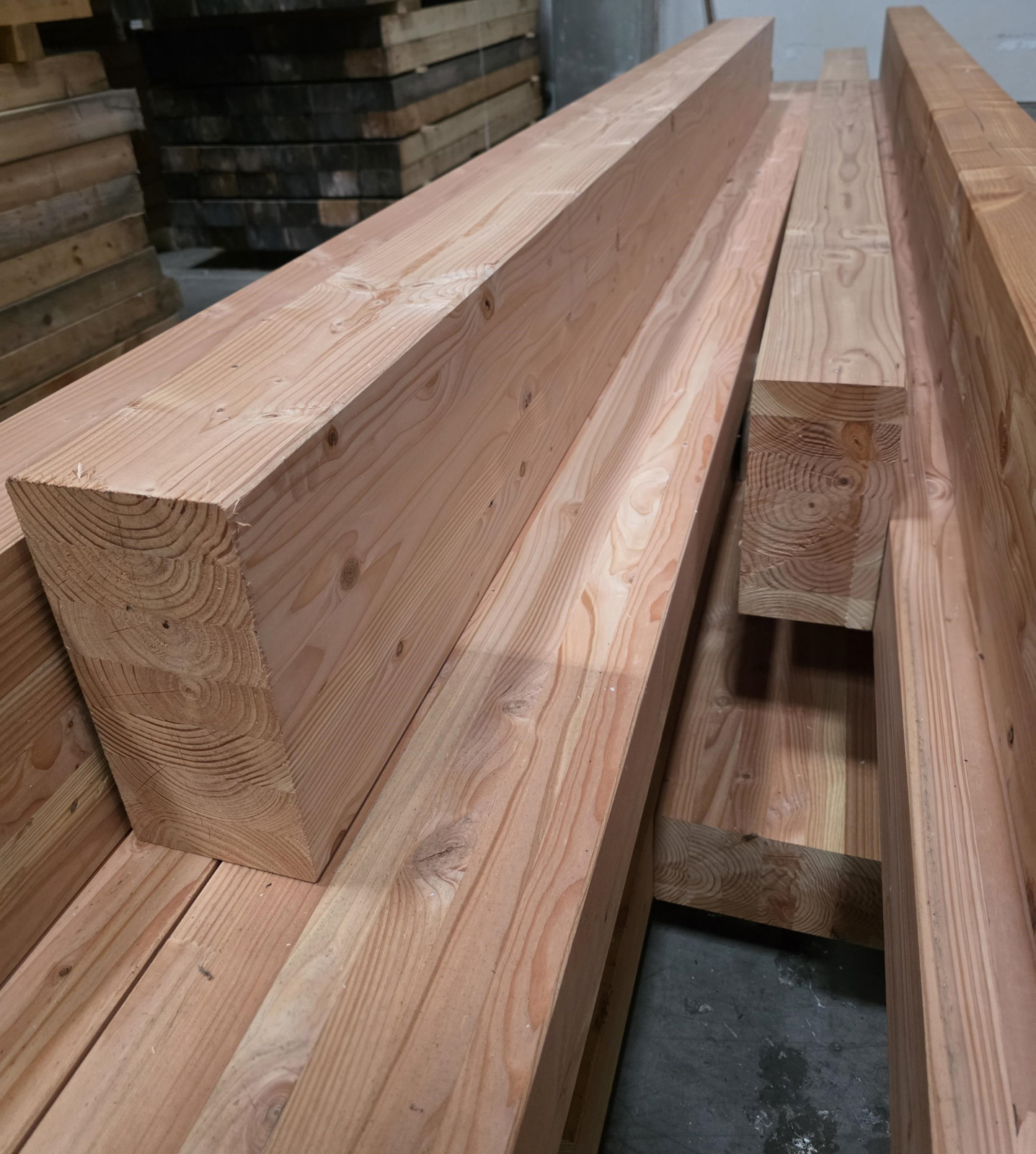
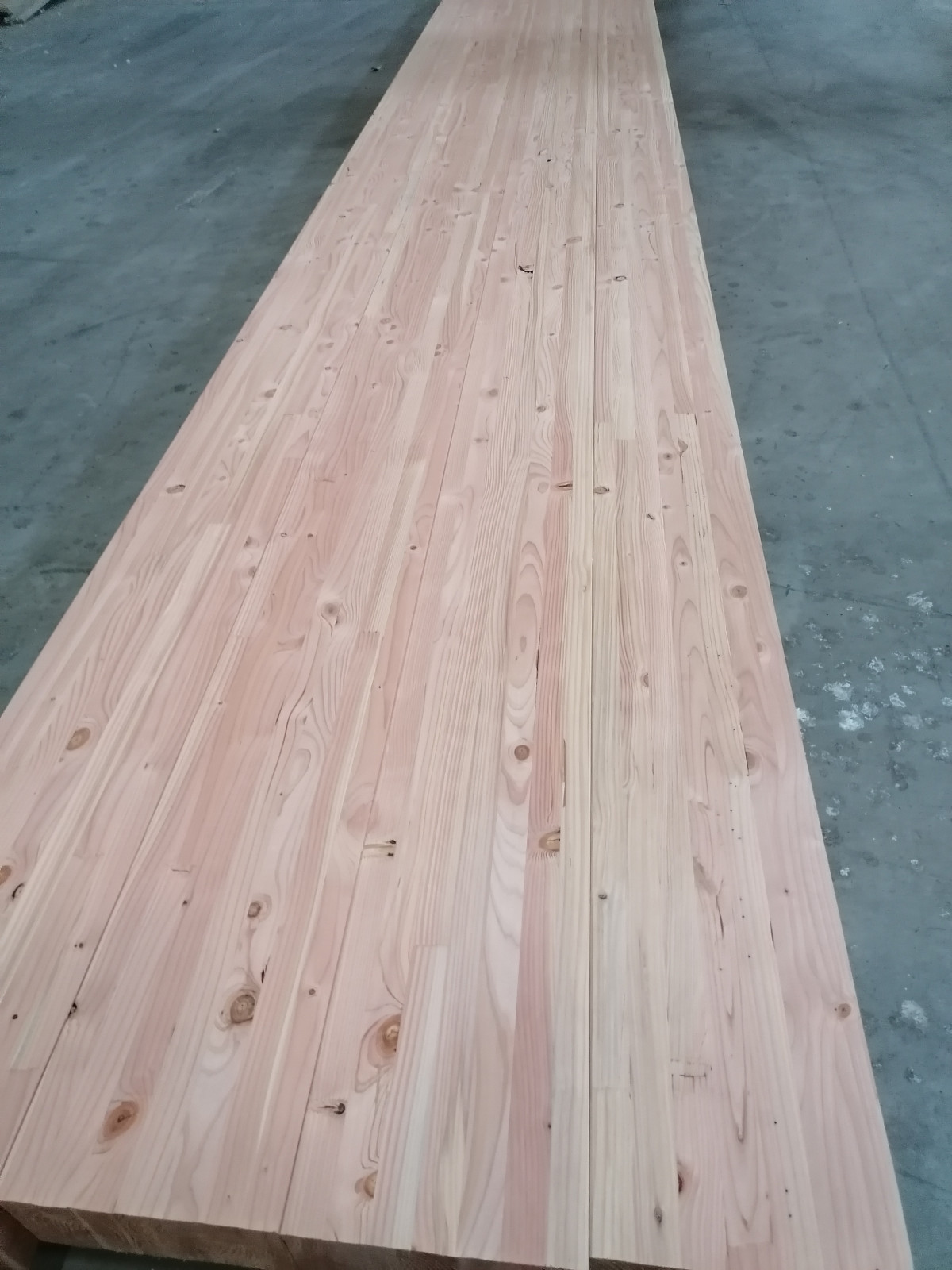
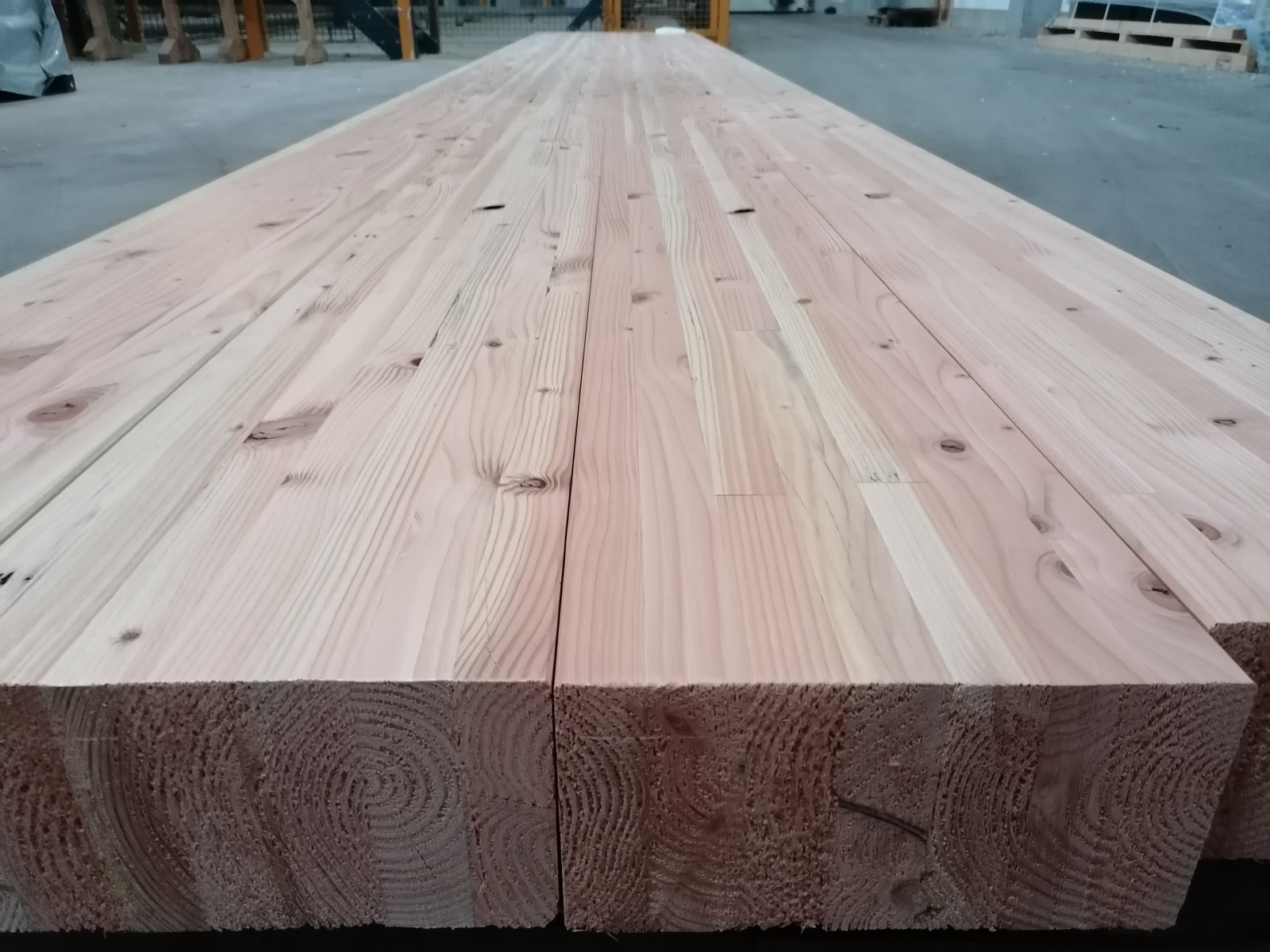
      The HASSLACHER group offers glulam manufactured from Larch and Douglas fir – two wood species known for their high natural durability, attractive appearance and sustainability. Both are ideal for use as “timber in the garden” as well as for load-bearing structures in interior and especially exterior applications. Glulam from both species is produced and quality-controlled according to the harmonized product standard EN 14080.

      Larch – elegant, robust and weather-resistant

      • Properties: Hardest European softwood species, high natural durability
      • Applications: Terraces, balconies, carports, columns, interior design use and round posts
      • Technical data:
        • Strength classes: GL24c and GL24h
        • Cross sections:
          Heights from 80 to 1,280 mm, additional heights available as special components
          Widths from 80 to 200 mm in 20‑mm increments; special widths up to 280 mm realizable on request or via block gluing or lamella-strip technology
        • Service classes: Service classes 1 to 3; for service class 3, lamella thickness is limited to max. 35 mm
        • Durability class: 3 to 4 according to EN 350
        • Use class: UC 3.1 according to EN 335 with reduced sapwood content
      • Surface qualities: Visual grade, industrial grade
      • Special characteristics: Ideal for freely exposed structures and all exterior applications; distinctive color variation from reddish to brown tones

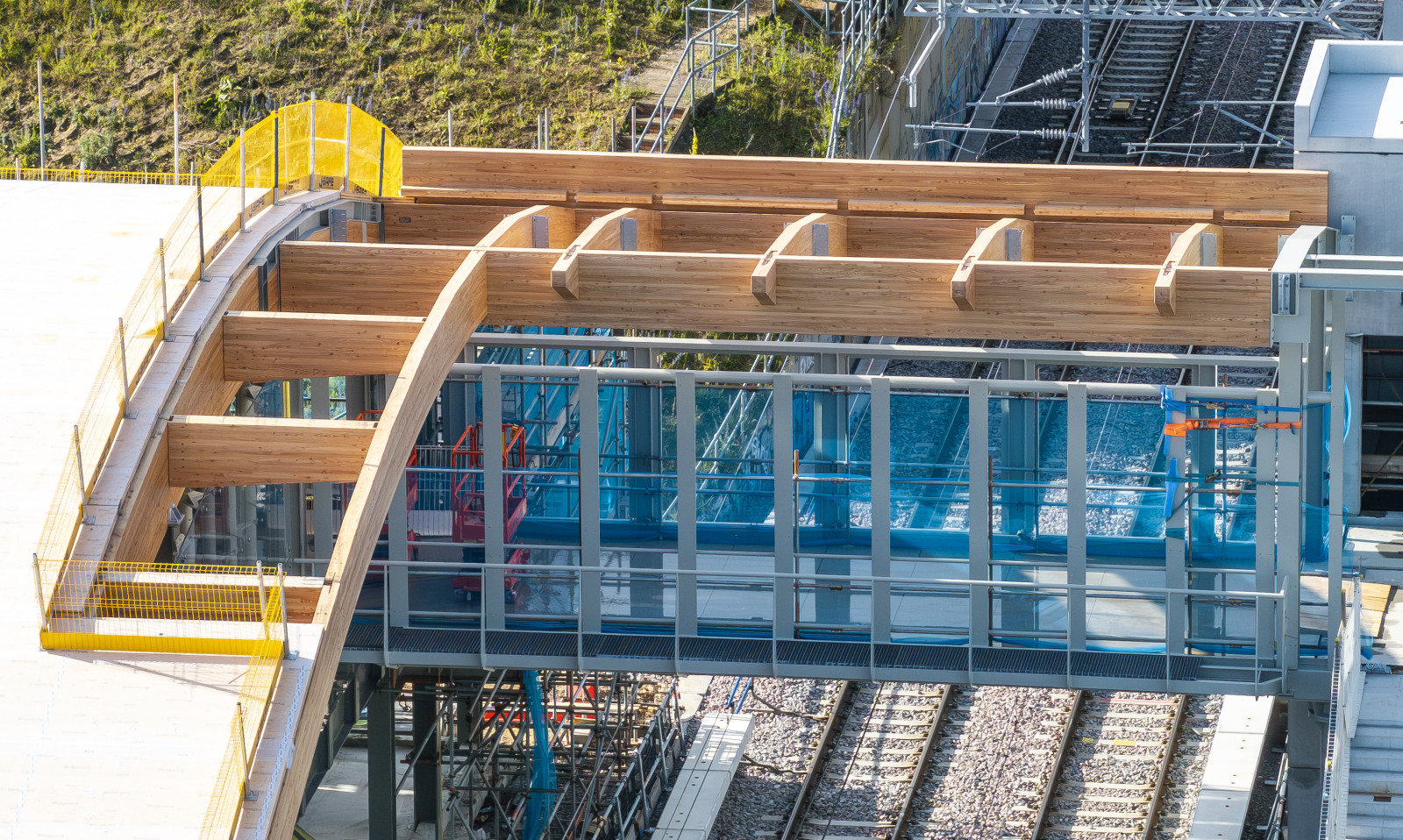
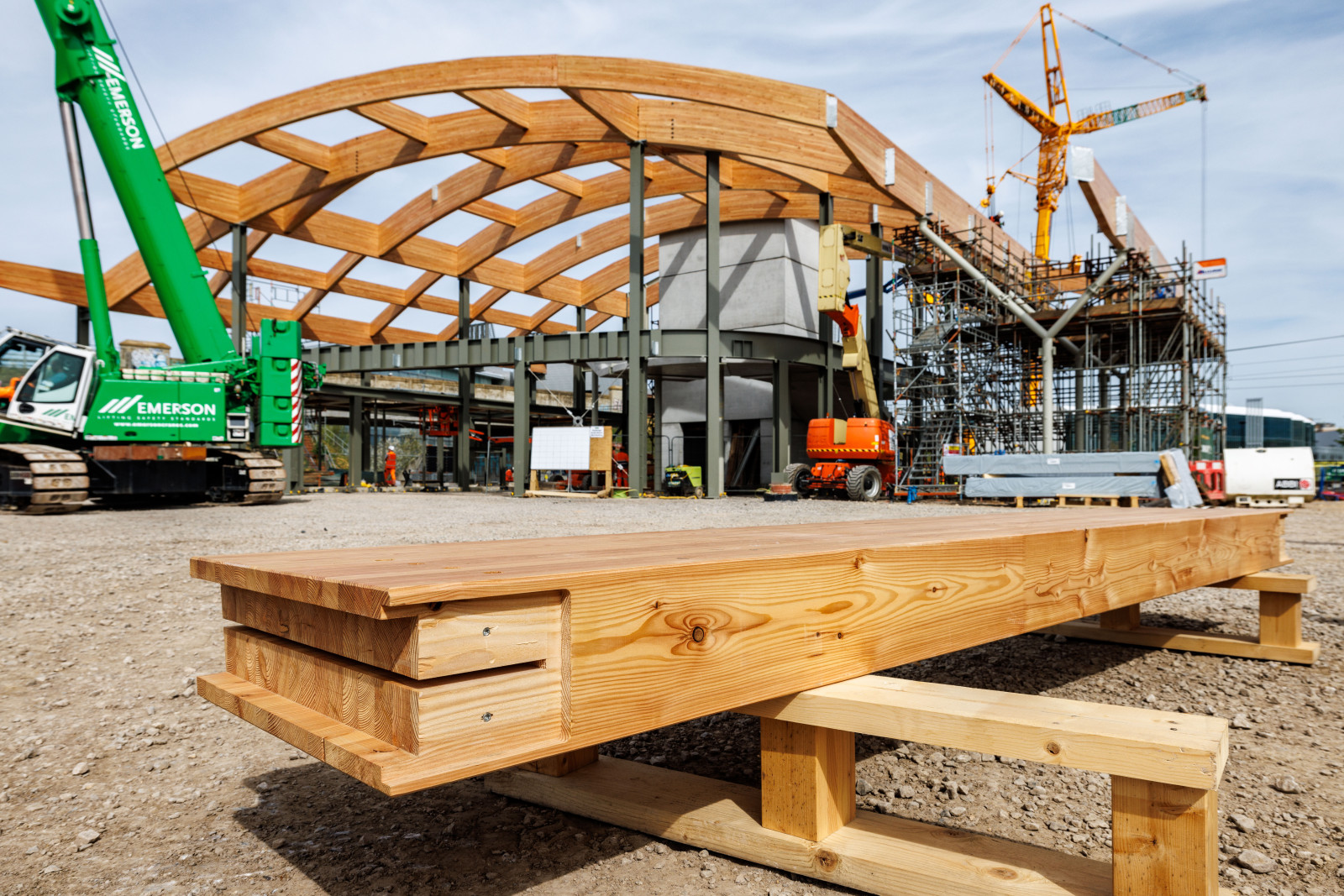
      HASSLACHER Larch glulam in modern railway construction: Cambridge South Station

      Cambridge South Station is a flagship project for sustainable and modern timber construction in infrastructure. The building and platform canopies are made of glulam and cross-laminated timber (CLT) from European Larch, manufactured at the HASSLACHER group sites in Kleinheubach and Stall (HASSLACHER Holzbauteile GmbH & Co. KG and NORITEC Holzindustrie GmbH). Larch was selected for its high natural durability. For CLT, the innovative HASSLACHER Excellent surface was used, enabling resource-efficient use of premium timber qualities while providing an almost joint-free and crack-free appearance due to its cross-laminated structure.

      The station provides a central connection to the Cambridge Biomedical Campus, is designed as a car-free transport hub and is built for high passenger volumes. A standout feature is its green roof – possibly the largest of its kind in the UK – planted with native wildflowers to enhance biodiversity and local climate conditions.

      The installation phase was demanding: several weekend closures of active railway tracks and continuous round-the-clock assembly work were required. In total, 424 m³ of larch glulam and 366 m³ of larch CLT were used.

      More information on this innovative project:
      https://www.hasslacher.com/Cambridge-South-Station-en

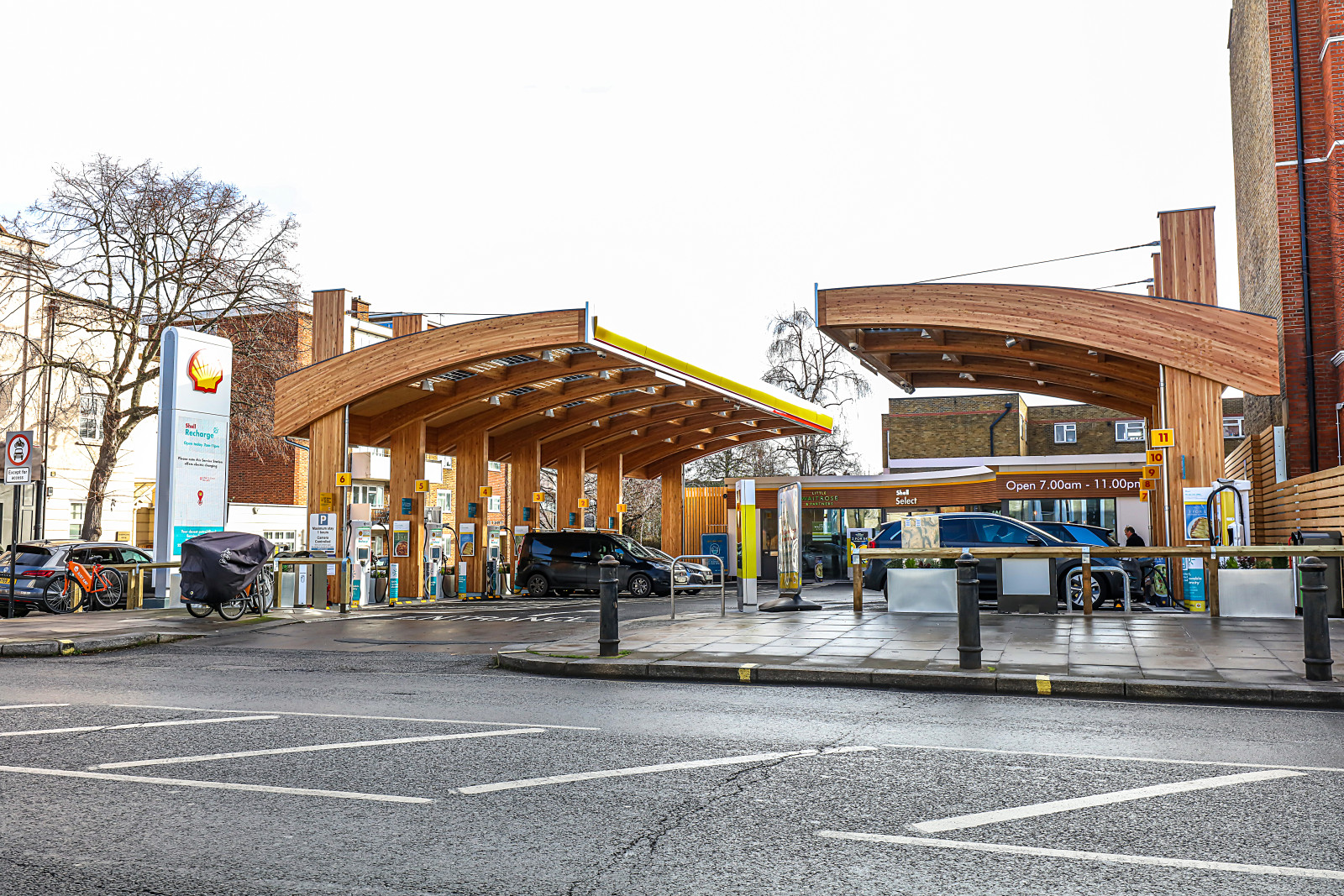
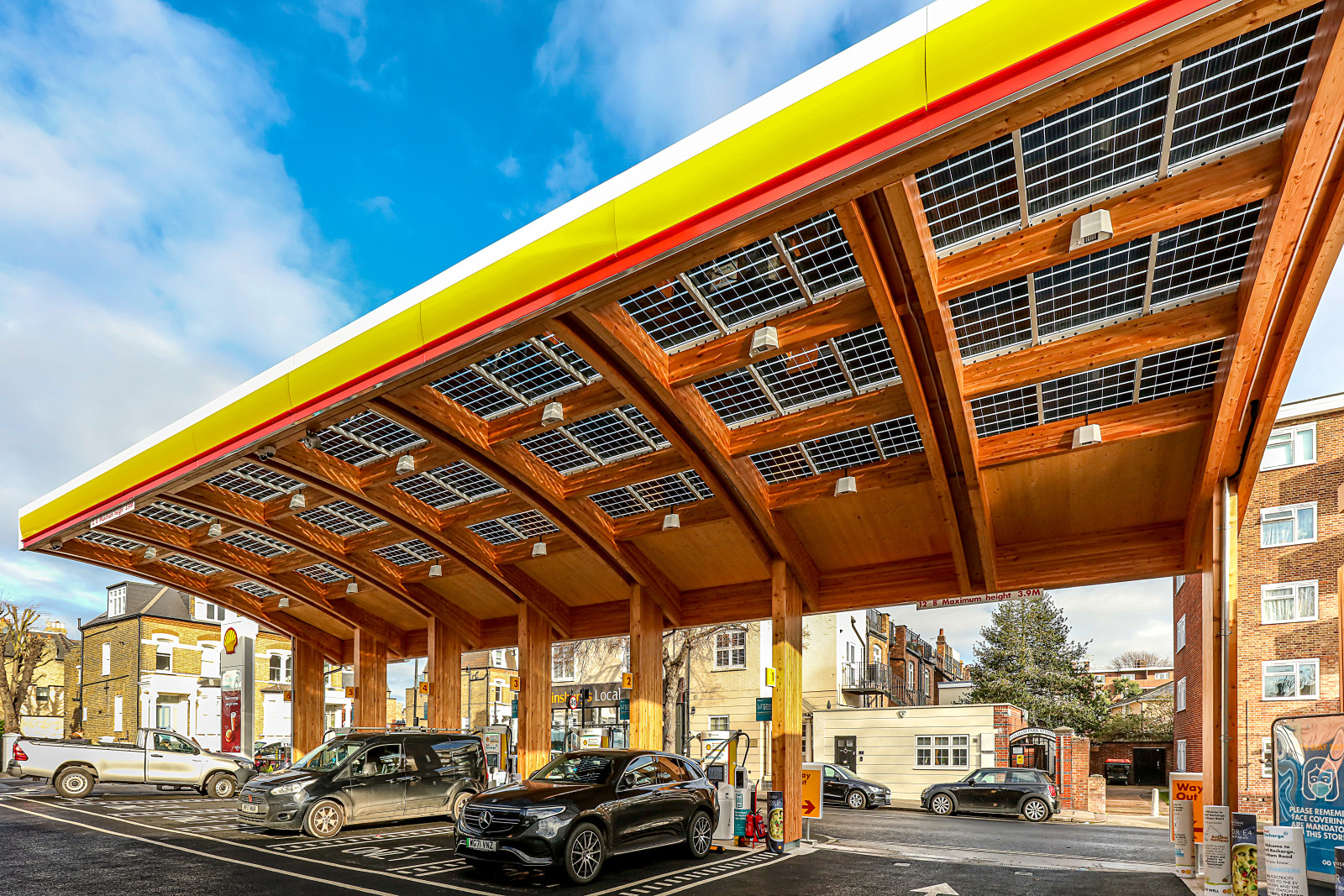
      Project highlight with Larch glulam: Shell EV Hub in Fulham, London

      The Shell EV Hub is an outstanding example of sustainable architecture and the use of high-quality glulam. For the freely exposed roof structures of this innovative charging hub, around 50 m³ of Larch glulam produced by the HASSLACHER group were used and delivered in a highly prefabricated state.

      Project characteristics:

      • Freely exposed construction: Larch is ideally suited for exposed areas due to its high natural durability
      • Design & functionality: The roof structure combines elegant aesthetics with technical precision, creating an inviting atmosphere for users
      • Short installation time: The entire timber structure was erected in just a few days, as the cantilevered beams and fixed columns were fully prefabricated and delivered to site as complete elements

      More information:
      https://www.hasslacher.com/en/shell-ev-hub-fulham

      Douglas Fir – strength combined with cost efficiency and durability

      • Properties: High load-bearing capacity, dimensional stability, reddish‑brown colour
      • Applications: Roof structures and pergolas, carports, premium exterior timber, and character-rich interior surfaces
      • Technical data:
        • Strength class: GL24h
        • Cross sections:
          Heights from 80 to 1,280 mm
          Widths from 100 to 200 mm in 20‑mm increments
          (80 mm also available on request, invoiced as 100 mm)
        • Lengths up to 24 metres
      • Special characteristics: High fire resistance and chemical resistance; durability class of heartwood: 3–4 according to EN 350

      For additional technical details and quality descriptions, our expert Georg Jeitler (Head of Quality & Innovation) is available at: qualityandinnovation@hasslacher.com

      Sustainability in focus

      Both timber species bind carbon during their growth. This renewable raw material comes from controlled sources, is harvested in forests managed according to strict requirements and within all legal frameworks, is fully utilized, and is circular‑economy‑capable at the end of its service life as a load‑bearing construction material.

      HASSLACHER group certificates:
      https://www.hasslacher.com/certificates

      FAQ section

      What is the difference between glulam made of Larch and Douglas fir?
      Larch is one of the hardest European softwoods and offers excellent weather resistance and an elegant appearance – ideal for freely exposed structures such as terraces or balconies. Douglas fir also offers high durability and excellent load-bearing capacity and is characterized by its reddish color. Due to its region of growth, Douglas fir has wider annual rings and a higher sapwood content compared to larch. Both species originate from European forestry.

      Is glulam made of Larch and Douglas fir suitable for freely exposed structures?
      Yes. Larch is traditionally used for exposed exterior applications such as balconies and carports. Douglas fir is also weather-resistant and suitable for roof structures, pergolas and other outdoor applications.

      Which strength classes does the HASSLACHER group offer for glulam?
      HASSLACHER glulam made of Larch is available in GL24c and GL24h. Douglas fir glulam is available in GL24h. Both comply with the harmonized product standard EN 14080.

      How sustainable is glulam made of Larch and Douglas fir?
      Both species are renewable, recyclable and act as carbon stores. They come from European forestry. Douglas fir grows faster and has a lower raw density compared to larch.


      Hot off the press

      News about HASSLACHER NORICA TIMBER